By
By
Nurses play a vital and multifaceted role in rare disease care, providing consistent patient support, education, and care coordination, and ongoing education is essential to empower them to meet the evolving needs.
November 2025
What role do nurses play in rare disease care?
According to Jasmine Goh, a Genetics Specialty Nurse at the KK Women’s and Children’s Hospital in Singapore, “Nurses are often the first and most consistent point of contact for individuals and families affected by rare diseases.” Indeed, nurses are the world’s largest workforce and play an intricate and crucial role in screening, supporting, educating, and coordinating care for rare disease patients. Sue Baker, co-founder of the Global Nursing Network for Rare Diseases (GNNRD) notes that “nurses make up 50% of the healthcare workforce and they are often the only accessible healthcare provider for patients, permeating all aspects and settings of care. If nurses aren’t aware of the additional challenges in rare disease they can’t provide the best care for their patients.”
Considering that approximately 5% of the global population has a rare disease, nurses should be seeing these patients on a weekly basis. However, in a Medscape survey of 50 nurses, 80% said that they never or rarely (1 or 2 times a year) see patients who have rare diseases (https://www.gimopen.org/article/S2949-7744(23)00817-8/fulltext). This highlights the need for nurse education. “Rare diseases are collectively common regardless of where you end up in your nursing career – you’ll see them. Nurses need to know how to look after these patients holistically and carefully and to ensure their psychological welfare is protected,” says Zoe Morrison, Clinical Nurse Specialist in Wales and UK Nurse Leader for the GNNRD.
As we learn more about rare diseases and as new therapies are developed, nurses need to keep up to date. Alicia Truelove, a nurse and rare disease advocate in California, United States says, “Education enhances the nurse’s ability to navigate today’s changing healthcare system. With the spotlight on rare disorders, it’s critical to equip nurses with the resources to continue advocating for their patients.”
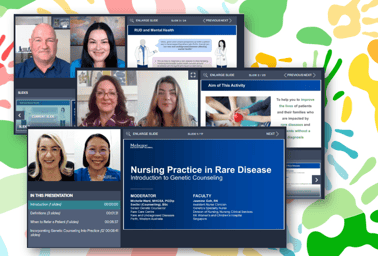
In 2025, Medscape teamed up with the Global Nursing Network for Rare Diseases (GNNRD; https://www.gnnrd.org/about) to develop Nursing Practice in Rare Disease, a series of 3 educational activities just for nurses.
- The first, Introduction to Genetic Counseling is aimed at enabling nurses to better support patients and their families navigate genetic testing, counselling, and interpretation in the context of rare disease
- The second, Mental Health Support and Well-Being, focuses on nurse support for the mental health and well-being of patients and families affected by a rare or undiagnosed disease
- Finally, Care Coordination is an activity aimed at enabling nurses to better to support their patients and families affected by a rare or undiagnosed disease, by understanding the importance of care coordination, its role in supporting people living with a rare disease, and by making practical changes to more effectively coordinate care across the wider care team.
“Equipping nurses with knowledge in genetics and rare disease care empowers them to provide accurate information, coordinate complex care, and offer the psychosocial support that families desperately need. It’s not just about clinical skills, it is about building confidence, cultural sensitivity, and advocacy. By strengthening nurses’ genomic literacy, we can close the gap between rapid scientific advances and everyday patient care,” said Jasmine Goh.
.png)